A Sensory Room... The Best Space To Create For Some Awesome Relaxation Or Stimulation. Let's Start Building!
A sensory room is extremely therapeutic for both children and adults with sensory processing disorders...from mild to severe. In fact, anyone in the general population could benefit from spending time in one!By the term "sensory room", we are talking about a specific room, with specific sensory equipment and activities, to benefit specific sensory processing difficulties.
The room must be tailored to one's specific sensory needs just the same as, for example, you purchase a mattress and/or pillow. Some people will prefer a firm mattress and firm pillow, some prefer a soft mattress and soft pillow, and some prefer a combination, soft mattress with a hard pillow or vice versa.
Although a sensory room will be tailored to address an individual's unique needs, (and ideally would be set up with input from a knowledgeable professional such as an occupational therapist) there is also certain equipment which can have therapeutic sensory system effects on most anyone.
The reason for this is because it will become therapeutic depending on how, when, and why the equipment or activities are used. The professional guidance needs to come in regards to how, when, and why... it can then benefit anyone on opposite ends of the sensory processing continuum.
This article will tell you about equipment and activities that can be used for both hypo- and hyper- sensitivity, as well as specific suggestions for one end of the spectrum or the other.
(Yes, I admit, this is tricky... often children don't neatly fall on one end or another, but fluctuate back and forth. Exactly! This is precisely the reason an OT can help you set up a room specific to you or your child's needs.)
Remember, the point of a sensory room is to calm or stimulate an individual through each of the senses. Also keep in mind, when we are talking about sensory processing, we like to refer to the 7 or 8 senses instead of the usual 5, so be sure to include them all in your sensory room!
Sheffield Children's Hospital Ryegate Sensory Room
Vestibular Input
I will start with one of the most common items you should include in a sensory room... a swing that moves in one plane
Unfortunately, these are expensive. The cost is much more "justifiable" and achievable in a clinic or rehab facility. If you can afford one, fantastic! It will be money well spent. It would definitely be the ONE piece of equipment you would want.
If you are setting up a sensory room in your own home, and are looking for a cheaper alternative, hammocks, hammock chairs, glider swings, and glider rockers can give you some of the same effects. Either way, the gentle swinging motion can be both soothing or stimulating depending on its use.
Other vestibular activities include regular
swings,
slides,
balance boards and
discs, tubes to roll in,
rocking
horses or
bouncing
horses, and/or
zip lines.
Visual Input And Lighting
A good sensory room will have controllable light sources and light therapy. Most importantly, make sure there are absolutely no fluorescent lights (they are bothersome even to people without sensory processing disorders)! Color cubes, fiber optic light sources, rope lights, and/or low wattage pastel colored light bulbs are all good ideas.Additional visual accommodations and equipment can include: play tents/huts, lava lamps, bubble columns, wall water fountains (or tabletop), and liquid light projectors.
Smell (Olfactory)
As discussed in my aromatherapy machines article, aromatherapy is quite beneficial to children with sensory processing disorders. For this reason, you will want to include some variety of particular aromas which can be used via different mediums in your sensory room.
The various "mediums" can include scented oils, scented candles (if safe for the person you are using it for), aroma diffusers, scented markers, scented playdoh, toys, scented stuffed animals or blankets, and/or scented neck wraps, eye masks, scented potpouri and sprays.
Remember, the particular scents you use will vary with the effects you are trying to achieve. For example, great calming scents include (among many others!); vanilla, lavender, peppermint, or jasmine. Stimulating scents include (among others); cinnamon, strong sweet or sour smells, floral scents, or spices.
Taste (Oral / Oral-Motor)
Supervised licking, sucking, tasting, or chewing a variety of foods, liquids, gum, or candy is a great activity to include in your sensory room.
For hyposensitive individuals include sweet, salty, spicy, and/or sour flavors. For hypersensitive individuals, just one new taste or texture at a time!
Meet them at their level! Do not force them to eat anything they are extremely anxious about. If you must, due to extreme sensitivities, give them many opportunities to explore the food through their other senses - i.e., sight, smell, feel etc. - before introducing it orally.
Also beneficial to both hyper- and hypo- sensitive
individuals are oral massagers; to be used prior to eating and/or
trying new foods and textures. Use the oral massagers to stimulate mouth,
cheeks, tongue, palate, and lips to decrease hypersensitivities or
increase input they are craving.
Oral Sensitivities - A great resource for the signs of oral sensitivities - hypersensitive or hyposensitive - as it relates to Sensory Processing Disorders, as well as great treatment ideas!
Oral Defensiveness - Want to know how to help your child with oral defensiveness tolerate dentist visits better? Then you don't want to miss these specific techniques!
Proprioception
Sensory rooms beg for good proprioceptive input! Click here for an in depth understanding of proprioception) Anything which will allow the individual to be "squished" or "hugged" will give the deep pressure input their bodies crave.
You can use therapy balls to roll on top of them, weighted vests and blankets, big floor pillows, bean bag chairs, lycra swings, and hammocks. Deep pressure input applied correctly and at the proper time will calm, relax, and soothe even the highest energy kids!
You will also want your sensory room to provide
opportunities for activities which give muscles and joints significant use
and pressure. Some great ideas are:
scooter boards,
moon shoes,
jumpolenes,
tunnels,
hippity hop balls, mini trampolines, squeeze/fidget
toys, and things to climb or hang on.
Heavy Work Activities - an extensive list of heavy work activities and proprioceptive input (gross motor, fine motor, oral motor, etc.) which are useful in calming unfocused, over aroused children.
Tactile / Touch / Feel
Tactile experiences will be the easiest to supply in your sensory room, after all, everything has it's own texture and feel. However, popular tactile input activities will include: playdoh, funny foam, "gak", "glop" (see playdoh recipes) , zyrofoam, textured balls, tactile walls, boards and books, and/or textured puzzles, sensory brushing with surgical brush (using Wilbarger brushing protocol), coloring over textured materials, fingerpaints (regular, or using pudding and/or Kool Aid mix, etc.), koosh balls, using various materials (i.e., satin, carpet swatches, silk, lambswool, washcloths, cotton balls, etc.), and don't forget massagers and vibrating kids toys.
Auditory
Lastly, we must not forget the soothing sounds! They come in all types
of mediums; sound pillows, sound eye masks, CD's, tapes, nature sound
machines, white noise machines, indoor wind chimes, etc. Nature sounds,
white noise, classical music, or new age music are the most popular
choices for calming, organizing input.
Naturally, I could go on and on (oops, already did) with specific suggestions! Whether you are working with an Occupational Therapist or not, you may instinctively know what is calming, soothing, or stimulating from previous experience or even common sense.
Also, know that new sensory experiences are encouraged and necessary to test out
and provide for your child. You truly may not know how a particular
sensory experience will effect your child until you try it.
The bottom line is this... a sensory room based around an individual's
sensory needs can be one of the most valuable therapeutic tools possible.
General Suggestions
-
Be sure to include as many sensory experiences and "stations" as possible.
-
Work on 1-2 senses at a time; for example, soothing music while feeling different textures, or deep pressure input while using light/visual therapy and stimuli.
-
Use the room as "therapy", i.e. 5-7 days a week, 1-2 times per day, depending on the individual's needs.
-
Encourage all senses to be explored and used.
-
Pay attention to your child's reaction to various stimuli. Give him more of what he is seeking, the best input to calm or stimulate.
-
DO NOT force anything.
-
Be creative in activities and ways in which the sensory stimuli is introduced.
-
Watch for signs of over stimulation/over arousal/extreme fears.
And, above all... have fun! This should be a pleasurable, calming,
organizing, exploratory experience!
I have tried to find the least expensive products for you, but know that
if you CAN afford it, there are companies that have very specific
equipment, individuals who will design and set up a room for you, and some
incredible products! If cost is not an issue, this will be best.
However, if cost IS an issue, building a sensory room is still extremely
feasible, even within a budget, by using some creativity.
This is why I have provided resources for you within this site, as well as
on my partner store site for you (see link below) to use for a fraction of
the cost of your typical sensory integration catalog equipment!
Couldn't we all use our own sensory room?
Click Here For MORE Sensory Equipment And Ideas For Your Sensory Room
Click Here For More Sensory Integration Products!
Do You Have A Sensory Room?
Do you have your own sensory room at home? Tell us about it! How did you set it up... what kind of products did you use etc. Share it the readers of Sensory-Processing-Disorder.com
What Other Visitors Have Said
Click below to see contributions from other visitors to this page...
Sensory on a budget 
Ok, I own it. I'm on a budget so I go Sensory Ghetto room for my son. To throw in some more to the mix he loves his super heroes and cats. So, here we …
My personalised sensory bedroom
Hi, I am Amy. I have autism. and I love sensory rooms. I go to the sensory room at pepenbury but only once a fortnight for half hour. I dont get to …
Sensory Room Product Search
Hello,
I am looking for ideas and places to purchase sensory products for my daughter. She will be turning 4 in a week and we are starting a sensory …
Sensory Room
My 5 year old daughter has SPD and Epilepsy (mild). We are building a house and we made her playroom yellow, which I thought would be a "happy" color, …
High functioning schizophrenic
I was diagnosed 8 years ago with schizophrenia. I used to be employed in the field of health care and working with the developmentally disabled. Anyway, …
White noise
our daughter....without knowing....has created her own sensory room without knowing why. She prefers her door shut tight, a small Christmas tree with …
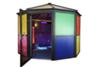
Sensorypod at Yorkshire Wildlife Park
A new sensory pod is being opened at Yorkshire Wildlife Park in March 2011. It is being funded by Doncaster Council Aiming High project and is therefore …
Question for 5yr old sons sensory room
My son is 5 and we would like to make him a sensory room...
i found this site looking for info on helping not only our son but us cope with his Sensory …
Resource worker
Im looking to create a sensory room for adults with special needs i have a £1000 budget could you give me any ideas please.
Panic
I am thirteen and sometimes i get these enormous waves of fear and terror and will panic. I think it is a panic attack but i could just be freakin out …
How to create a sensory break room
I am thinking of how to create a sensory break room for myself.
Where do you do it.
How big should it be.
What should i put in it.
note* i …
I'm want to convert my garage into a sensory room
Jabin is 7 and he was just diagnosed with SPD two months ago. We have been in therapy since, and it is truly amazing how happy he is there.
I would love …
Sensory Room Consultant
Hi-- I am looking for an SPD OT, and an SPD OT who can help us design a sensory room. We are in the Westchester area of NY.
Thank you in advance for …
Sensory room for my 11 year old son with ADHD
From what I've learned over the years, ADHD is in close proximity to Asperger's Syndrome. My 11 year old son, Austin, was diagnosed with ADHD at six years …

My grandaughters sensory room Not rated yet
Hi im a 24/7, on duty grandmother and guardian of my beautiful smart lil granddaughter. shes 5yrs old who has autism, non verbal severe sensory processing …
Nanny Not rated yet
Hi my name is Amber I work with two families who both have children who have Autism. since I started working with them one I started working with children …
I am afraid of the Sensory Room Not rated yet
I can't balance on the therapy balls.
I am always afraid that the balance beams will fall on my foot and make a loud noise.
I am afraid of anything …
Mary Nunez Not rated yet
I use my eyes too for stimulation so that I can view items with a wide variety of textures,for example,using reed fencing to cover the ceiling or shag …
Teacher Not rated yet
We have a top floor that we have designated for a Sensory Room. We put a loft bed in it, not for sleeping, but for climbing and for sliding. He loves …
Sensory tent in classroom for high school students with severe cognitive disabilities Not rated yet
One of the creative HS teachers, Ms. Brown, designed this sensory area in a multi-room classroom for older students (ages 15+) with severe cognitive disabilities. …
Which tent Not rated yet
Does anyone know of a good tent to use for a sensory room? It has to be big.
Sensory room for adults Not rated yet
Well right now my sensory room is my bedroom lol. I have two lights,, the regular one and a nice soft small one...the walls are a nice shade of quiet …
Leave Sensory Room And Return To Sensory Processing Disorder Home Page

Copyright
©
www.sensory-processing-disorder.com
Recent Articles


-
Pulling pants up too high
Apr 15, 24 03:59 PM
Oh my gosh, I need some help and it's with a bit of a sensitive subject! My 17 yr old has autism and part of that involves sensory issues with clothing. -
Hair sensitivities
Apr 02, 24 12:05 AM
Has anyone ever been given a reason for feeling even the tiniest hair in your shirt/ or bra? I can find it like a needle in a haystack and it will drive -
Your not alone, a neurodivergent teen
Mar 28, 24 10:28 PM
So I'm Shannon,14,I'm going to 9th grade in August (2 months). Living with SPD has gotta be one of the most frustrating aspects of my life. It's really